

How to Make Your House Smell Good for Guests: A Tactical Guide to Home Fragrance
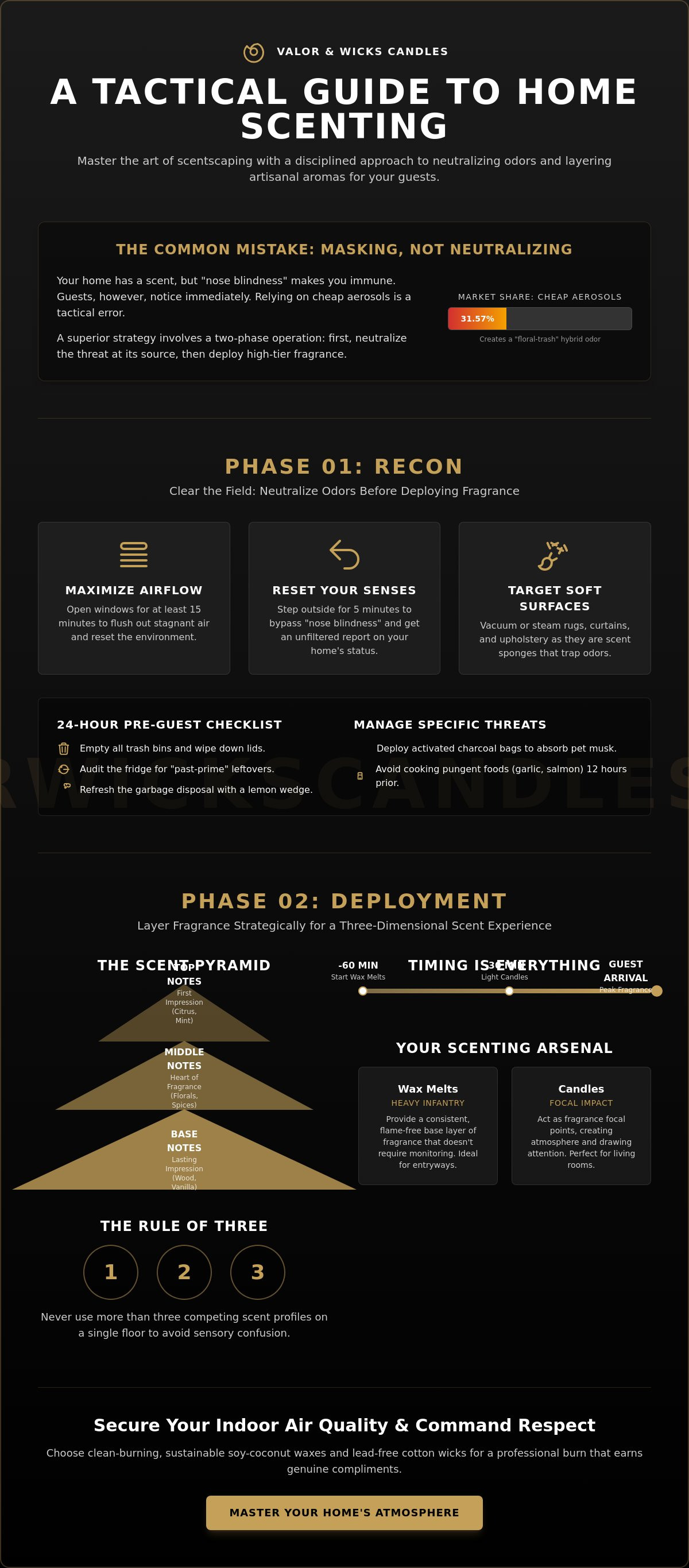
Your home has a scent, but you are likely too nose-blind to realize what it is. It is a tactical disadvantage. Guests decide how they feel about your space the second they cross the threshold, and first impressions are rarely silent. If you are wondering how to make your house smell good for guests without relying on the cheap aerosols that currently hold a 31.57% market share, you need a better plan. You need a coordinated strike on odors followed by a strategic deployment of high-tier fragrance.
We know you want an atmosphere that commands respect and earns genuine compliments. You deserve a home that smells like premium craftsmanship, not a chemistry lab or a wet dog. This guide helps you master "scentscaping" through a disciplined, step-by-step approach to neutralizing odors and layering artisanal aromas. We will show you how to build a signature scent using clean-burning candles and wax melts that meet the new May 2026 FDA allergen labeling standards. It is time to stop adulting poorly and start scenting with strength, honor, and light.
Key Takeaways
- Start with the recon phase by neutralizing odors at the source and maximizing airflow to clear the field before deploying fragrance.
- Execute a tactical strategy on how to make your house smell good for guests by layering wax melts for consistent background scent and candles for focal impact.
- Scentscape your space room-by-room to ensure entryway notes invite guests in while kitchen fragrances complement your cooking rather than competing with it.
- Secure your indoor air quality with ingredient integrity, choosing sustainable soy-coconut waxes and lead-free cotton wicks for a clean, professional burn.
- Match the fragrance to the mission, using our Signature Collection for sophisticated gatherings or Funny Flames to break the ice with irreverent humor.
Neutralizing Odors: The Recon Phase Before Scenting
You cannot build a monument on a swamp. Before you light a single wick from our Signature Collection, you must clear the air. Odors are stubborn enemies. They hide in the fibers of your rugs and the depths of your drains. If you want to know how to make your house smell good for guests, you start by making it smell like nothing at all. Open your windows for at least 15 minutes. This simple act flushes out stagnant air and resets the environment. It is the most basic tactical advantage you have.
Most homeowners suffer from nose blindness. Your brain ignores the "house smell" to keep you sane. To reset your senses, step outside for five minutes. Walk the dog. Check the mail. When you return, your senses will provide a raw, unfiltered report on your home's status. Pay close attention to soft surfaces like curtains and rugs. These are scent sponges that trap dust, pet dander, and last night's dinner. Give them a quick vacuum or a steam clean if you are serious about the mission.
The 24-Hour Pre-Guest Checklist
Precision matters. Start your prep a full day early to ensure no lingering funk remains. Follow this checklist to secure the perimeter:
- Empty the bins: Take out every bag of trash. Wipe the lids with a citrus cleaner to kill lingering bacteria.
- Audit the fridge: Toss the "past-prime" leftovers. Those three-day-old tacos are leaking sour notes every time the door opens.
- Refresh the disposal: Drop a lemon wedge down the garbage disposal and run the blades. It provides an immediate, sharp reset for the kitchen sink.
Managing Pet and Cooking Odors
Pets are family, but they often smell like the outdoors. Deploy activated charcoal bags in high-traffic pet areas to absorb moisture and musk. These bags work silently to neutralize without adding synthetic noise. When it comes to the kitchen, timing is everything. Do not cook salmon, heavy garlic, or cabbage within 12 hours of your guests' arrival. These oils become airborne and cling to your walls like a bad memory.
Never attempt to mask a bad smell with a heavy aerosol spray. It creates a "floral-trash" hybrid that is far more offensive than the original odor. Looking back at the history of air fresheners, we see that early solutions often just overwhelmed the senses rather than solving the underlying problem. We do things differently. We neutralize the target first. Only then do we deploy the premium fragrance layers that define a welcoming home. Adulting is hard; scenting your home shouldn't be.
Strategic Scent Layering: Moving Beyond Basic Air Fresheners
Once the recon phase is complete, move to deployment. Professionals don't just spray a bottle and hope for the best. That is amateur hour. To truly master how to make your house smell good for guests, you must understand the Scent Pyramid. This structure consists of top, middle, and base notes. Top notes like citrus or mint provide the initial handshake. Middle notes are the heart of the fragrance, often featuring florals or spices. Base notes like vanilla, musk, or wood are the lasting impression. By layering these, you create a scent that feels three-dimensional rather than flat and synthetic.
Stick to the rule of three. Never use more than three competing scent profiles on a single floor. If your living room features a woody profile, keep the kitchen in the citrus or spice family. Sensory overlap leads to confusion. Timing is also critical for a successful mission. Start your wax melts 60 minutes before the event to build a foundation. Light your focal point candles 30 minutes before the doorbell rings. This ensures the fragrance peaks exactly as your guests enter the space. It is a calculated move that ensures maximum impact without overwhelming the senses.
The Power of Wax Melts for Continuous Fragrance
Wax melts are your heavy infantry. They provide a consistent, flame-free base layer of fragrance that doesn't require constant monitoring. Position a warmer in your entryway. It creates an immediate "wow" factor without the risk of an open flame near guests' coats or bags. You can even mix cubes from different packs to create a custom signature aroma that belongs only to your home. Since wax melts don't evaporate, they offer a sustained scent throw that DIY simmer pots simply cannot match. For a base layer that commands respect, explore our Wax Melts collection and start building your home's olfactory defense.
Room Sprays: The Tactical Quick-Strike
Room sprays are your tactical quick-strike units. If you missed a spot or need a localized boost in a guest bathroom, a quick mist does the trick. Use the "mist and walk" technique. Spray high into the center of the room and walk through it to ensure even distribution. Avoid cheap, mass-market options that hide behind vague labels. Many consumers are rightfully concerned about the health risks of air fresheners found in big-box stores, which often contain harsh synthetic chemicals. Stick to phthalate-free options to ensure guest comfort and safety. A quick strike on upholstery or curtains can lock in a scent for hours, but use a light touch. Precision is better than power.
Room-by-Room Scentscaping: Creating the Right Atmosphere
Scentscaping is tactical home design. It requires intentionality and a clear mission for every square foot. You wouldn't wear a tuxedo to a mud run; don't put a heavy floral candle in your kitchen. Each room serves a different purpose, and your fragrance choices should reflect that. Understanding the power of scent in home design allows you to influence your guests' moods before you even offer them a drink. This is how to make your house smell good for guests without looking like you are trying too hard.
The Entryway: The "First Five Seconds" Rule
The entryway is your opening move. First impressions are formed within five seconds of crossing the threshold. Use citrus or light botanicals here. These notes feel clean, high-energy, and welcoming. They signal that the perimeter is secure and the vibe is right. For a pro-level hack, place a car diffuser inside your coat closet. It ensures that when you take a guest's jacket, they aren't hit with the smell of old shoes or stagnant air. An olfactory greeting is a hospitality tool that sets the tone for the entire evening.
The Kitchen and Dining Area
Kitchens are for food. Your fragrance should complement the menu, not compete with it. Heavy florals near the dinner table are a tactical error because they interfere with the palate. Instead, lean into edible aromas that feel authentic to the space. Follow these rules for the heart of the home:
- Choose edible notes: Our Dessert Collection candles are the perfect kitchen companion, offering scents that mimic baking.
- Avoid floral interference: Keep roses and lilies away from the food to ensure the meal tastes as intended.
- Create a brunch vibe: Use warm, roasted coffee notes for morning gatherings to establish an immediate "coffee shop" atmosphere.
The living room is where your signature style takes point. This is the command center of your home. Use complex, multi-layered fragrances from our Signature Collection to establish a premium, sophisticated environment. If the gathering is casual, swap the sophistication for a laugh with our "I Don’t Want too Adult today" themed candle. It breaks the ice and smells incredible. Finally, secure the bathroom. This is a high-stakes area. Avoid heavy perfumes. Go for sharp, clean profiles like mint, eucalyptus, or crisp linen. It communicates a level of discipline and hygiene that every guest appreciates. Strength, honor, and a house that doesn't smell like a locker room.
Ingredient Integrity: Why Clean Burns Matter for Your Guests
Discipline starts with raw materials. You wouldn't serve your guests mystery meat; don't subject their lungs to mystery wax. Paraffin is a byproduct of the oil industry. It is cheap. It is dirty. If you are learning how to make your house smell good for guests, do not undercut your efforts with soot-heavy candles. Hand-poured artisanal candles offer a level of oversight that mass-produced factory tins simply cannot match. It is the difference between a tactical operation and a desperate scramble.
You must understand the difference between "Cold Throw" and "Hot Throw." Cold throw is the scent you get when the candle is sitting on the shelf. It is the initial handshake. Hot throw is the real mission performance. It is the scent that fills the room once the wick is lit. Cheap candles often have a great cold throw but fail the hot throw test. They use phthalates to boost the scent, which can trigger chemical sensitivities in your guests. We avoid these shortcuts because how to make your house smell good for guests shouldn't involve making them sneeze.
The Soy-Coconut Advantage
Coconut wax is the elite choice for high-tier home fragrance. It carries fragrance oils more efficiently than soy alone, providing a superior scent throw. It also burns at a lower temperature. This means your candle lasts longer and stays cleaner. Perform the clean burn test yourself. A premium soy-coconut blend will not leave black soot on your walls or ceilings. Botanical waxes represent a sustainable commitment to both the planet and your guest's respiratory health.
Cotton Wicks vs. Metal Cores
The history of candle safety is written in the wicks. While the U.S. Consumer Product Safety Commission banned lead-core wicks in 2003, low-quality imports still pose risks. We use 100% lead-free cotton wicks to ensure a safe, disciplined burn. Proper maintenance is part of the duty. Trim your wick to exactly 1/4 inch before every lighting. This prevents "mushrooming" and keeps the flame from becoming a tactical hazard. Strength and honor begin with the quality of the materials you trust in your living space. Secure your home's atmosphere by choosing our Signature Collection for your next gathering.
Choosing Your Vibe: From Signature Sophistication to Humorous Hospitality
Atmosphere is an objective. In a veteran owned operation, every detail serves the mission. When you consider how to make your house smell good for guests, you must first define the intent of the gathering. A formal holiday dinner requires a different tactical scent than a chaotic Sunday football watch party. Mass market products held 63.6% of the total market share in 2025, but those generic scents lack the intentionality required for a truly curated home. You aren't generic. Your home shouldn't be either. Whether you are aiming for high tier elegance or a relaxed laugh, your fragrance choice is the final piece of your hospitality armor.
The Signature Collection for Formal Hosting
Elevate your space when the stakes are high. For formal events, lean into complex fragrance profiles that signal luxury and discipline. The psychology of scent is powerful. Deep resins, warm ambers, and sophisticated wood notes create an environment that feels established and secure. These aren't just smells; they are sensory anchors. Position a candle from our Signature Collection as part of a curated centerpiece on your dining table or mantle. It creates a focal point that draws guests in while providing a steady, high tier scent throw that lasts the entire evening. It is about command and presence.
Funny Candles as Icebreakers
Sometimes the mission is simply to relax. If you want to know how to make your house smell good for guests while keeping the mood light, look to our Funny Flames Collection. A relatable label acts as an immediate icebreaker. It tells your guests that while you take your craftsmanship seriously, you don't take "adulting" too seriously. This creates an approachable environment where people feel at ease the moment they read the jar. It is the perfect strategy for housewarmings or casual game nights where the goal is connection, not just ceremony.
Our "I Don’t Want to Adult Today" themed candle is a fan favorite for a reason. It sets a mood that is both premium and playful. You get the same high quality soy coconut wax and artisanal fragrance as our signature line, but with a dry wit that pokes fun at the daily grind. It is a conversation starter that ensures your home smells incredible while your guests are laughing. To find the perfect match for your next mission, Browse our Funny Flames collection for your next party. Strength, honor, and a sense of humor are the keys to a house that people never want to leave.
Take Command of Your Home’s First Impression
A welcoming home is a tactical win. By now, you have the operational plan to neutralize odors and deploy a sophisticated fragrance strategy. Mastering how to make your house smell good for guests is more than just lighting a wick; it is about intentionality and high-tier craftsmanship. You've moved past cheap aerosols and vague ingredients. You are now scenting with the precision of a professional. It is time to stop adulting by accident and start leading with scent. Your home is your sanctuary. Make sure it smells like one.
Valor & Wicks Candles is veteran-owned and operated. We don't do shortcuts. Every candle is hand-poured in small batches using 100% phthalate-free, sustainable waxes. We believe in strength, honor, and the power of light to transform a room. When you choose our products, you are supporting a mission of integrity and quality. Find your home’s signature scent at Valor & Wicks Candles and secure your perimeter today. Go out there and earn those guest compliments. You've earned the win.
Frequently Asked Questions
How long before guests arrive should I light my candles?
Light your candles 30 to 45 minutes before the doorbell rings. This timing allows the wax pool to reach the edges of the jar, ensuring the hot throw peaks exactly when guests arrive. If you are learning how to make your house smell good for guests, timing is a tactical necessity. Lighting too early wastes fuel. Lighting too late means the scent hasn't fully deployed. Aim for that 45 minute window for maximum atmospheric impact.
What is the best scent to make a house smell "expensive"?
Choose woody, amber, or deep resinous notes to achieve an expensive atmosphere. Scents like sandalwood, oud, or cedar command immediate respect. These profiles feel established and intentional. They lack the synthetic sugar notes found in 63.6% of mass market products sold in 2025. To elevate your space, stick to our Signature Collection. These complex blends provide a sophisticated foundation that makes any room feel like a high tier retreat.
Can I use wax melts and candles at the same time?
You can absolutely use wax melts and candles simultaneously as long as they share a complementary scent profile. Use wax melts in entryways for a consistent background layer and place candles in the living room as a focal point. This creates a multi dimensional environment. Just follow the rule of three. Never let more than three competing scents battle for dominance on one floor. It is about coordinated fragrance deployment.
How do I make my house smell good if I have dogs?
Neutralize the environment with activated charcoal before you attempt to scent a home with pets. Dogs introduce organic odors that a candle cannot simply hide. If you want to know how to make your house smell good for guests when you have four legged roommates, focus on the recon phase. Clean the pet beds and open windows for 15 minutes. Once the air is clear, use a soy coconut wax melt to establish a fresh, professional aroma.
What are the safest candles to burn around children and guests?
The safest options are hand poured soy coconut blends featuring 100% lead free cotton wicks. Avoid paraffin waxes that release soot and phthalates that trigger sensitivities. Our candles meet the strict May 2026 FDA allergen labeling standards, ensuring transparency for your guests. Safety is a matter of integrity. Choosing clean burning materials protects the air quality of your home while providing a premium experience for everyone in the room.
How do I stop my house from smelling like "old house"?
Eliminate old house smells by maximizing airflow and cleaning scent absorbing soft surfaces. Open your windows for at least 15 minutes daily to flush out stagnant air. Rugs and curtains trap 80% of household odors over time. Use a steam cleaner or a light mist of a phthalate free room spray to reset these fabrics. A clean environment is the only way to ensure your fragrance layers aren't competing with history.
Why can’t I smell my own house candles anymore?
You are likely experiencing olfactory fatigue, commonly known as nose blindness. Your brain ignores consistent scents to stay alert for new ones. It is a biological survival mechanism, but it is a tactical disadvantage for hosting. To reset your senses, step outside for five minutes. When you return, you'll get a raw report on your home's status. It is the only way to verify if your scent strategy is working.
What is the most welcoming scent for an entryway?
Bright citrus and light botanicals are the most welcoming choices for an entryway. These notes feel high energy and clean. They provide an immediate wow factor during the first five seconds of a guest's arrival. Avoid heavy, dark scents in small foyers. You want the greeting to feel airy and inviting. A crisp lemon or a light herbal blend signals that the home is well maintained and ready for company.